Skip to content
My Doc Compare Logo My Doc Compare

Words May Sound Alike, Mean Different Things.

  • Home
  • Word vs Word
  • Contact Us
  • About Us
    • Terms and Conditions
    • Privacy Policy
    • Disclaimer

Word vs Word

Home » Word vs Word » Page 8
Illustration explaining the difference between might and could in English grammar.
Posted inWord vs Word

Might vs Could: Meaning, Differences & Examples

Might vs could depends on the meaning you want to express. Both words can describe something that is possible but uncertain. Might commonly expresses an uncertain possibility, while could can…
Posted by Eddy October 19, 2026
Training or trainning spelling comparison showing training as the correct form.
Posted inWord vs Word

Training or Trainning: Which Spelling Is Correct?

The correct spelling is training, with one n before the ending -ing. Trainning is a misspelling in standard English. The word training refers to learning or teaching skills, preparing for…
Posted by Eddy October 18, 2026
Excel or Excell spelling comparison showing Excel as the correct spelling.
Posted inWord vs Word

Excel or Excell: Which Spelling Is Correct?

The correct spelling is excel, with one l at the end. Excell is a common misspelling of the verb excel, which means to do something exceptionally well or to be…
Posted by Eddy October 18, 2026
An archer releases an arrow while a misplaced key lies on the ground.
Posted inWord vs Word

Loosing or Losing: Meaning, Difference and Examples

Use losing when you mean failing to win, misplacing something, or no longer having something. Use loosing when you mean releasing or setting something free. Although the words look almost…
Posted by Eddy October 18, 2026
Side-by-side comparison graphic showing buses with one S as the standard plural for public transit vehicles and busses with two S's as an archaic word for kisses.
Posted inWord vs Word

Busses or Buses? Correct Plural & Verb Usage Explained

Buses is the overwhelming standard plural spelling for large passenger vehicles. Busses is an acceptable but rare secondary variant for the plural noun, and it historically refers to the verb…
Posted by Eddy October 17, 2026
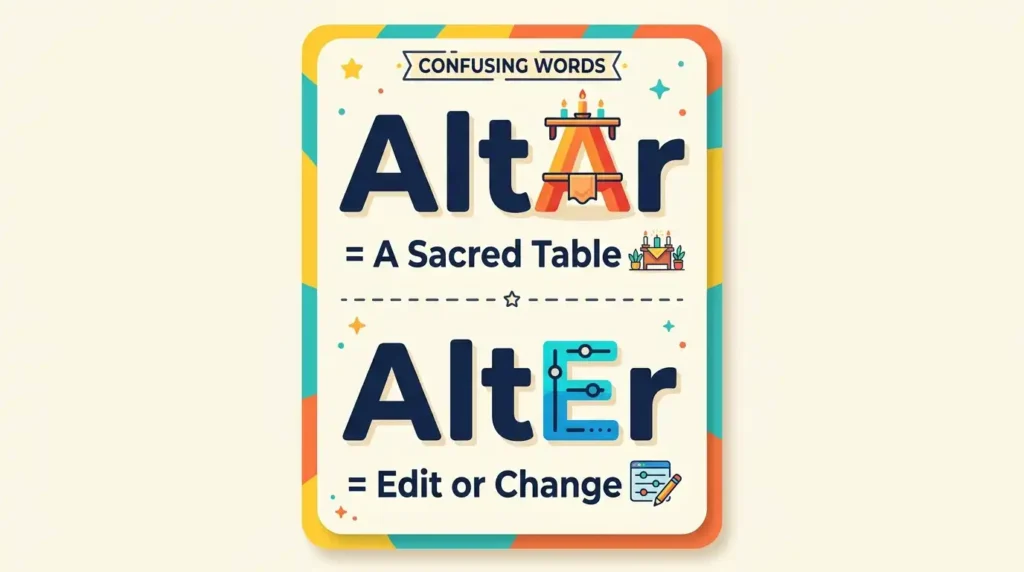
Side-by-side graphic explaining altar vs alter, showing a sacred table for the noun altar on the left and editing icons for the verb alter on the right.
Posted inWord vs Word

Altar vs. Alter: Differences, Examples, and Easy Rules

Altar (with an A) is a noun referring to a raised platform, table, or structure used for religious ceremonies, worship, or sacrifices. Alter (with an E) is a verb that…
Posted by Eddy October 17, 2026
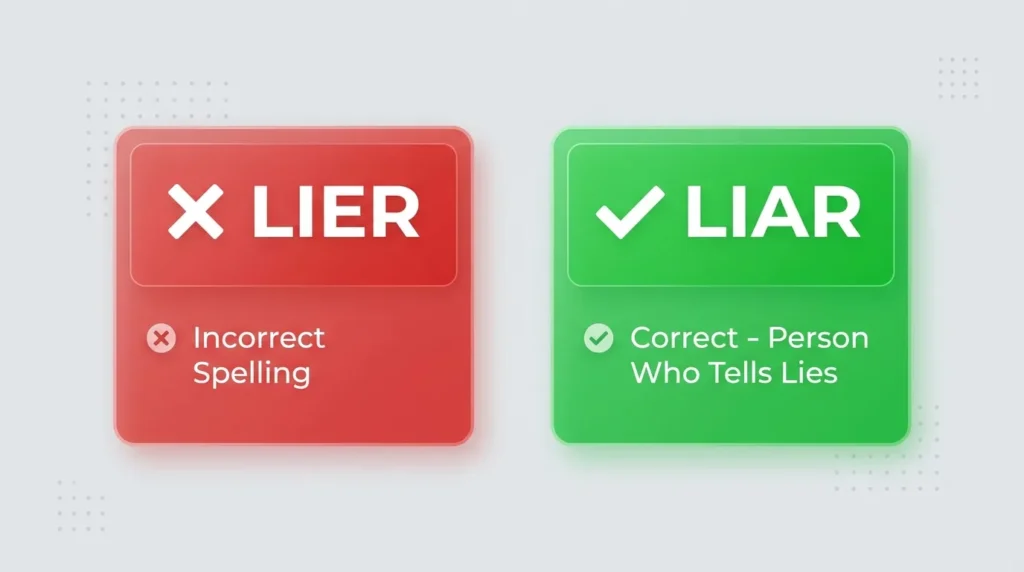
Comparison graphic showing 'lier' marked incorrect in red and 'liar' marked correct in green for describing a person who tells untruths.
Posted inWord vs Word

Lier vs Liar: Correct Spelling, Meaning & Easy Memory Trick

The correct spelling for someone who tells untruths is liar. The spelling lier is an error when used to describe a dishonest person. While "lier" exists as an archaic dictionary…
Posted by Eddy October 17, 2026
Notebook, pencil, growing plant, and coins representing the English phrase invest in.
Posted inWord vs Word

Invest On or Invest In? The Correct Usage Explained

If you're unsure whether to write invest on or invest in, invest in is the standard choice in most situations. Use it when talking about putting money into stocks, property,…
Posted by Eddy October 17, 2026
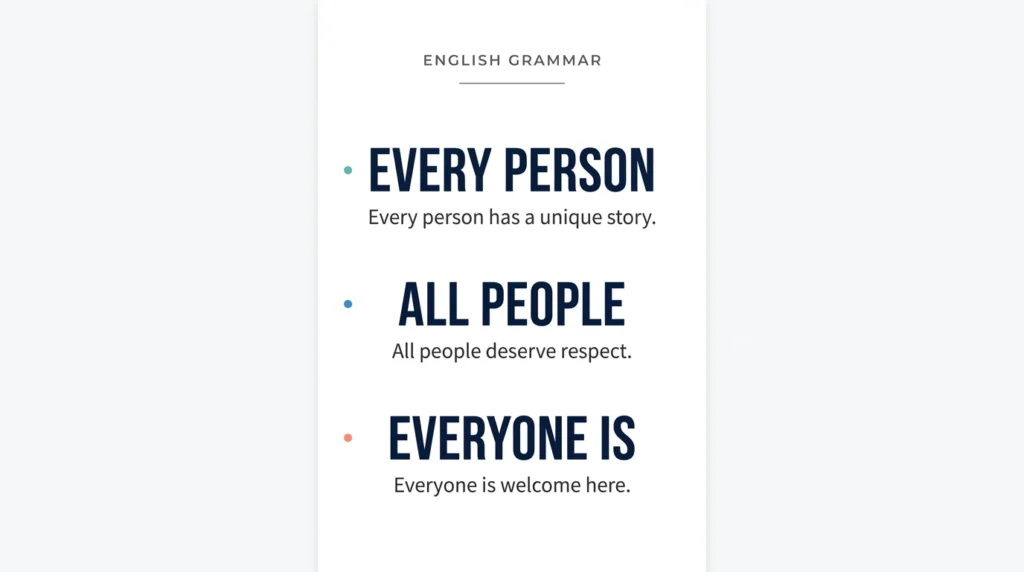
Every person or every people: English grammar explained
Posted inWord vs Word

Every Person or Every People: Which Is Correct?

The correct phrase in everyday English is “every person,” not “every people.” The word every normally takes a singular countable noun, so we say “every person,” “every student,” and “every…
Posted by Eddy October 15, 2026
Drier vs dryer explained with folded towels and a clothes dryer.
Posted inWord vs Word

Drier or Dryer: Which Spelling Is Correct?

Both drier and dryer are correct English words, but they are generally used for different purposes. Use drier when you mean “more dry” or “less wet,” as in The weather…
Posted by Eddy October 15, 2026

Posts pagination

Previous page 1 … 6 7 8 9 10 Next page

Recent Posts

  • Afterward vs Afterwards: Meaning, Difference, and How to Use Them Correctly
  • Shall vs Should: Meaning, Difference, Rules, and Examples
  • Waste vs Waist: Meaning, Difference & Easy Memory Trick
  • On Tuesday Morning vs. In the Tuesday Morning: Which Is Correct?
  • Did You Had vs Did You Have: Which One Is Correct?

Recent Comments

No comments to show.

Archives

  • November 2026
  • October 2026

Categories

  • Word vs Word
Copyright 2026 — My Doc Compare. All rights reserved.
Scroll to Top