The correct expression is too many, not to many, when you want to say that there is more than enough of something or an excessive number of things. The word…
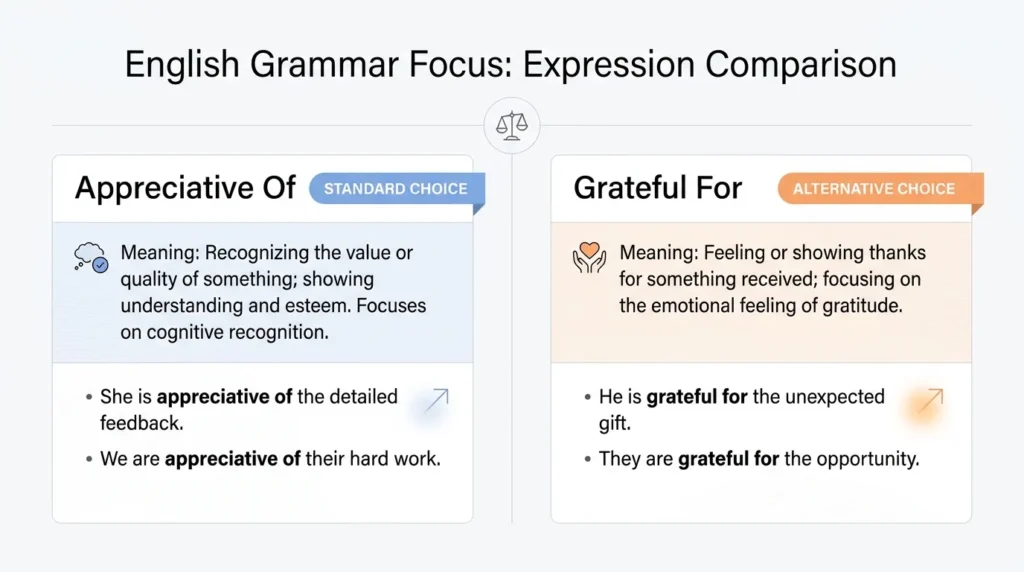
“Appreciative of” is the standard and preferred expression in English. Use it when expressing gratitude or recognizing the value of someone's help, kindness, effort, or support. Although “appreciative for” occasionally…
Both combating and combatting are correct spellings of the verb combat. However, combating is the more widely used spelling, particularly in American English. Combatting is also accepted, especially in British…
Violate and breach both describe failing to follow a rule, law, agreement, or obligation. However, they are not always interchangeable. Violate generally means to break or disregard a rule, law,…
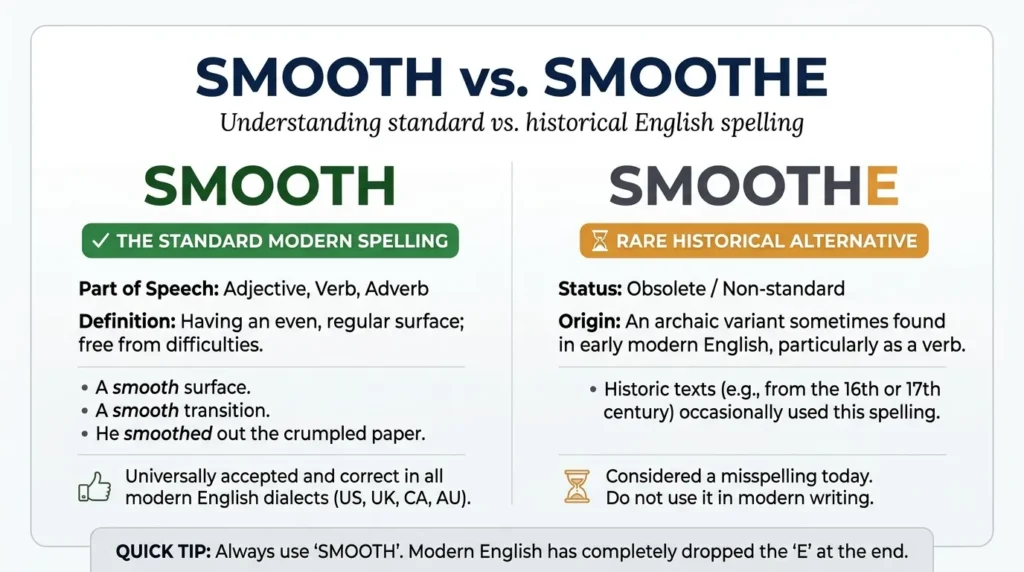
The correct spelling is smooth, not smoothe. Smooth is an adjective meaning even, flat, soft, or free from bumps, roughness, and interruptions. It can also describe something that happens easily…
The correct phrase is “has run,” not “has ran.” The verb run is irregular, so its past simple form is ran, while its past participle is run. After has, have,…
Have you ever wondered whether to write fair or fare? These two words sound exactly alike, but they have different meanings and grammatical uses. Choosing the wrong spelling can change…
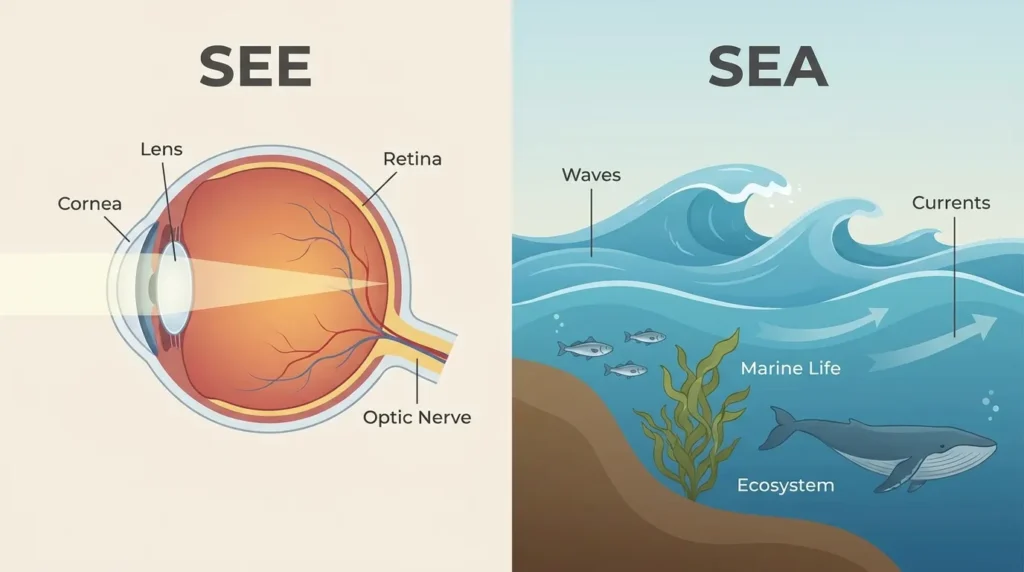
See and sea sound exactly the same, but they have completely different meanings. See is primarily a verb that means to notice something with your eyes, understand something, or meet…
Both in the street and on the street are grammatically correct, but they don't always describe the same situation. Use in the street when you want to emphasize that someone…
Should you write I feel happy or I felt happy? Both are grammatically correct, but they communicate different things. The difference between feel and felt comes down to verb tense…